
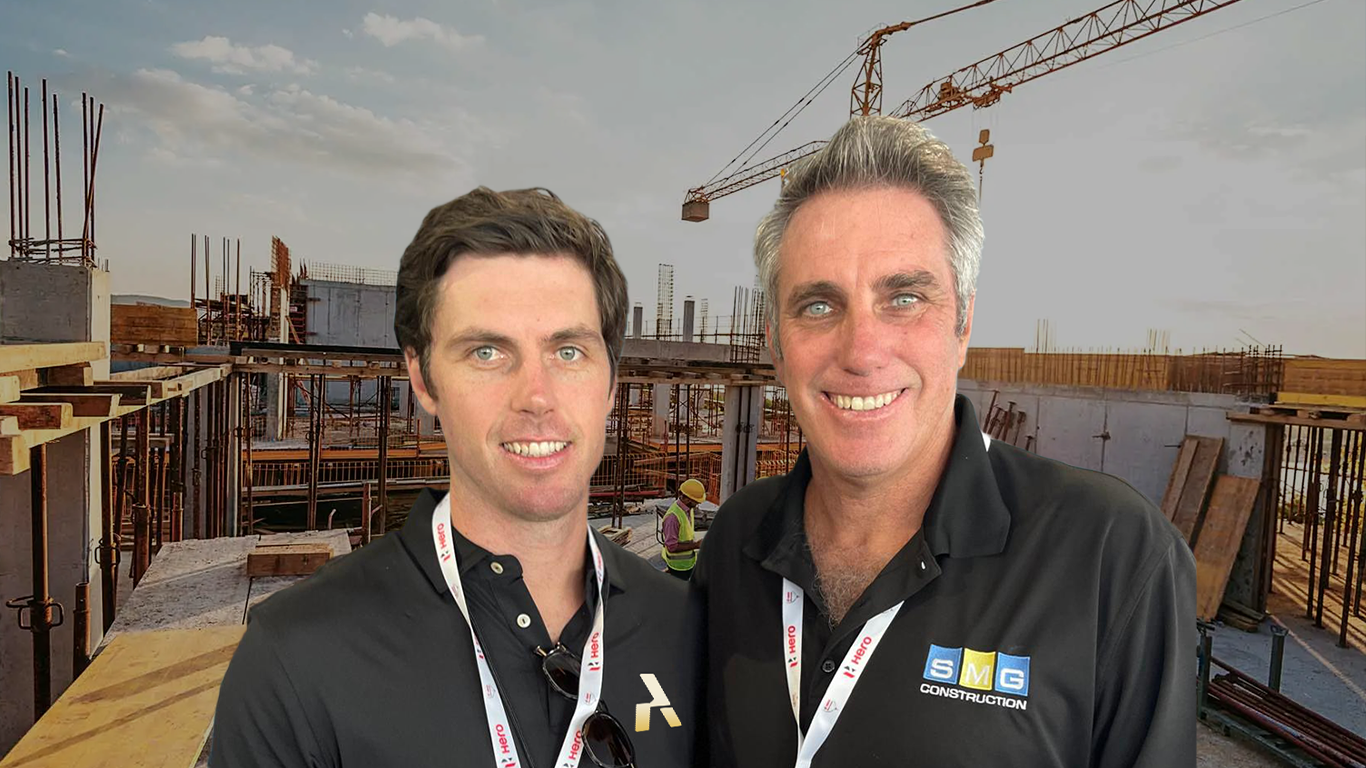
Multimillion-dollar builds were bleeding profit in ways no spreadsheet could catch until the job was already over budget. Entrepreneurs Brendan Ginns and Kyle Jadevaia built Asset Card to change that, giving builders real-time visibility into profit on every job.
By the time a $15 million home is finished, nearly every detail has been scrutinized to perfection. The stone. The millwork. The lighting. The custom front door. What may be considerably harder to see is whether the builder actually made money constructing it.
Brendan Ginns knew that problem intimately.
After business school in Canada, Ginns returned to the Bahamas and joined his family’s construction company, working his way through nearly every corner of the operation. He spent time in project management and manufacturing, then moved into pricing, budgeting and software implementation before eventually landing inside the accounting department. His role increasingly became finding inefficiencies in the business and figuring out how technology could fix them.
The closer Ginns got to the numbers, the clearer the problem became.
“It was from the accounting department that I determined where this real issue was,” he says. “The problem around delayed reporting and not really being able to understand project-by-project profitability.”
In luxury construction, that lag can be brutal. A multimillion-dollar project unfolds over months or years as labor costs shift, material prices rise, change orders pile up and hundreds of individual expenses hit the books. The accountants may be doing everything right, but the information they’re working with can already be old.
“My dad would typically work from a statement that, for the most part, was three months old. Sometimes, if we’re lucky, two months old,” Ginns says. By the end of a project, he explains, a healthy margin could evaporate into an overrun. “You completed the project, you were able to pay your employees, but you lost money on it at the end of the day.”
The problem wasn’t a lack of accounting. It was timing.
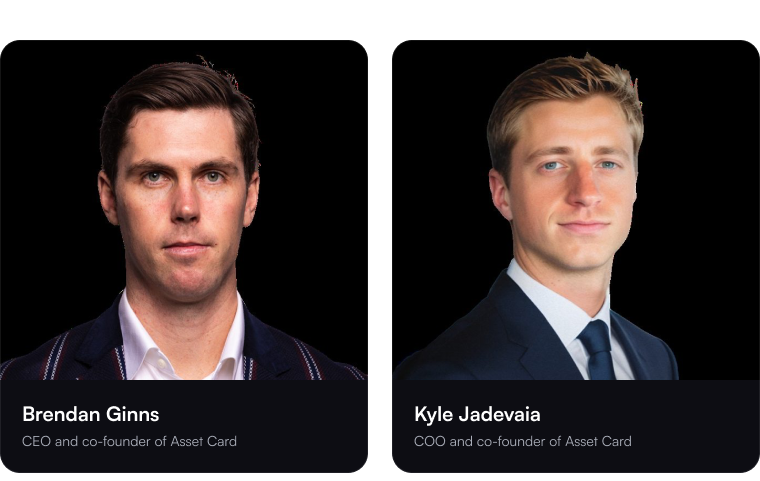
Ginns began thinking about how finances could be organized around each individual project, giving the people managing it a clearer picture while decisions were still being made. The idea followed him beyond the family business. Around 2018 and 2019, he launched Dash Two Solutions, developing software for small and midsize businesses, primarily in the Bahamas, and eventually began working on an HOA management platform.
Several hundred miles away, another entrepreneur happened to be working on something remarkably similar.
Kyle Jadevaia had already built a career in technology and sales, working with Fortune 500 clients including Twitter, AT&T and Equinix before launching his own telecommunications software company. He eventually sold that business through private equity for seven figures and was developing an HOA platform of his own when a mutual friend made the introduction.
“The technology had finally become possible.”
kyle Jadevaia
“We were actually building similar (HOA) software”, Jadevaia recalls. The two started bouncing ideas off one another, but their conversations soon moved beyond property management. Ginns began describing what he had seen inside his family’s construction business: sophisticated projects involving millions of dollars, without an equally sophisticated way to understand the financial picture in real time.
For Jadevaia, it was the kind of problem technology was finally ready to solve.
“My background is more in tech and sales,” he says. “I started with a software company and had Fortune 500 clients like Twitter, AT&T, Equinix.” After that came his telecommunications company and a successful exit. By the spring of 2024, his conversations with Ginns had turned toward something considerably bigger.
The question became deceptively simple: What if the financial system were built around the asset itself?
Or, as Ginns remembers putting it: “Wouldn’t it be cool if every asset could have its own bank account?”
That idea became Asset Card.
Rather than funneling expenses from multiple construction projects through one traditional financial structure and sorting them out later, Asset Card gives each project its own financial environment. Spending, budgets, accounts and transactions can be viewed and managed around the individual asset as they happen.
“Wouldn’t it be cool if every asset could have its own bank account?”
Brendan ginns
In practical terms, imagine a builder with several multimillion-dollar homes underway at once. Asset Card is designed to let that builder see what is being spent, where the money is going and how each property is tracking against its budget without waiting for the next accounting cycle. It isn’t intended to replace accounting. It fills the gap before accounting, when there is still time to make a different decision.
The timing mattered, too. Modern financial technology had begun making it possible to create accounts and spending controls in ways that hadn’t been feasible when Ginns first identified the problem.
“The technology had finally become possible,” Jadevaia says.
By May 2024, the two formally incorporated Asset Card. What began as conversations between two entrepreneurs tinkering with similar property-management software had evolved into a considerably more ambitious proposition: rethinking how money is managed around high-value assets from the ground up.
For Ginns and Jadevaia, Asset Card is less about reinventing accounting than questioning why financial visibility has remained stubbornly behind everything else. Luxury construction has become smarter, faster and more sophisticated, yet the systems tracking millions of dollars behind those projects haven’t evolved at the same pace.
Ginns and Jadevaia aren’t trying to change what gets built. They’re challenging the way the business behind it has always been done.